Yerdo is a village in Tur Abdin in south-eastern Turkey. Most of its people now live in Europe. What follows is the history of this place – as it is passed on within the community, supplemented by publicly documented records.
Origins
The name
The name of the village goes back to Syriac Aramaic and means “spring” or “running spring”. It refers to the many water sources the place was known for. In Syriac the name appears as Yerdo, in Kurdish the village is called Erdê, and the official Turkish name is Yamanlar.
The people from the village call themselves Yerdoye – and still do within this community, including the second and third generation in Europe.
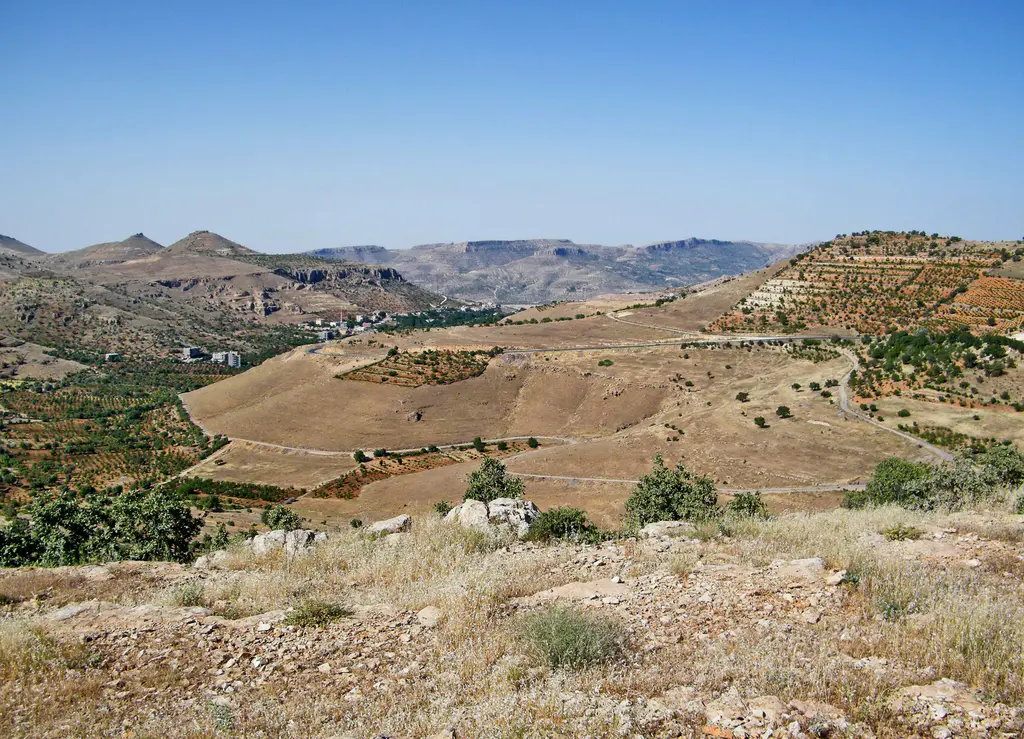
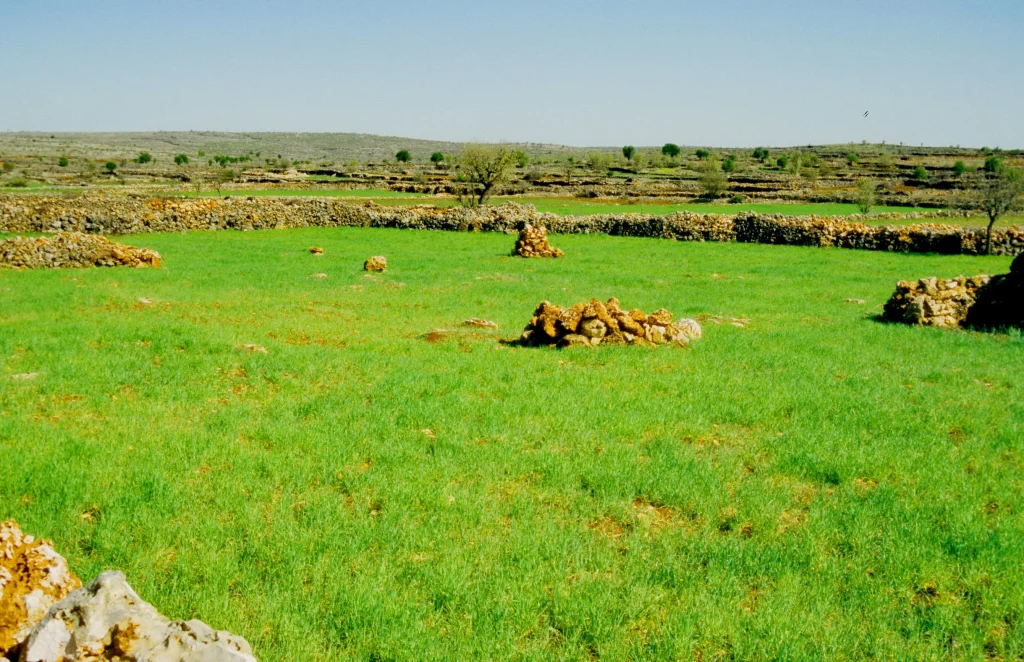
The village
Location and landscape
Yerdo lies in the north of Tur Abdin, about one kilometre from the ruins of Bayshon (Babesh), in the Gercüş district of Batman Province. The closest larger town is Kfar Gawson (Gercüş). The village lies south of the Tigris and the mountains of Karakas Dagi; the highest peak is 1339 metres and stands between Yerdo and the monastery of Dayro Daslibo.
Yerdo was known for the high mountains surrounding it, its natural springs and its green gardens with fruit and vegetables. People lived from livestock and farming – wheat, grapes, melons, vegetables and figs. Archaeological sites nearby are above all Babesh and Hesno d-Kifo (Hasankeyf).
History
Two communities
For a long time two communities lived side by side in Yerdo: Syriac Orthodox Christians and Kurdish families associated with the Arnas tribe – named after the neighbouring village of the same name. The church of Mor Aho stands, or stood, in the village.
Especially during the 1970s and 1980s almost all Christian families emigrated, mostly to Europe. Of around thirty families a single one remained until the end; since 2021 no Christian person lives in the village any more. Today more than 350 Christian Yerdoye families live spread across many European countries.
Present day
The village today
Yerdo has a small church, a mosque and a primary school. The church of Mor Aho is in poor condition – largely fallen into ruin – and would need a complete restoration. The Christian cemetery was decaying as well and had to be protected from animals, wind and rain. On 26 September 2018, with support from Yerdoye in Europe, a protective wall with a steel gate was built around the cemetery. Yerdoye celebrated the closing ceremony together with clergy and villagers.
There is electricity and water supply, though limited. The roads in the village are partly paved, partly not; the first lanes are gradually being cobbled. Overall they remain in poor condition and are barely passable in winter.
For reference
Documented records
- Turkish name
- Yamanlar
- Kurdish name
- Erdê
- Syriac (Aramaic)
- Yerdo – “spring”
- District
- Gercüş, Batman Province
- Region
- Tur Abdin
- Coordinates
- 37°32′49″ N, 41°27′40″ E
- Population 1960
- 507
- Population 2021
- 224
- Church
- Mor Aho
Source for this overview: Wikipedia, “Yamanlar, Gercüş”. The figures given there for 1915 contradict each other between the article text and the table and are therefore not listed here.